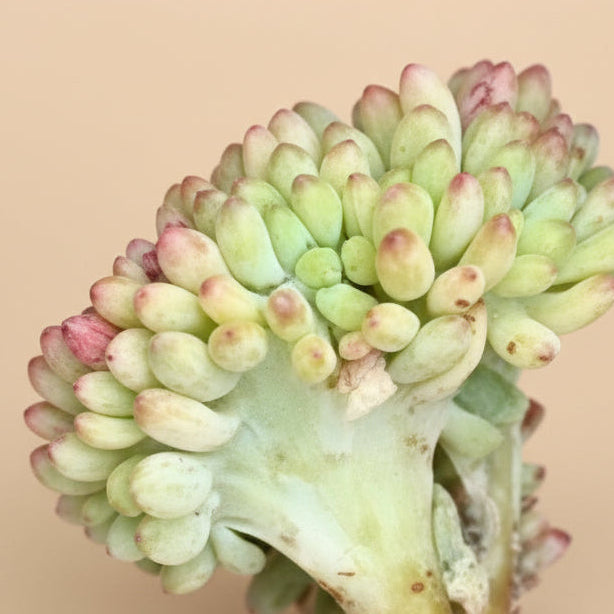
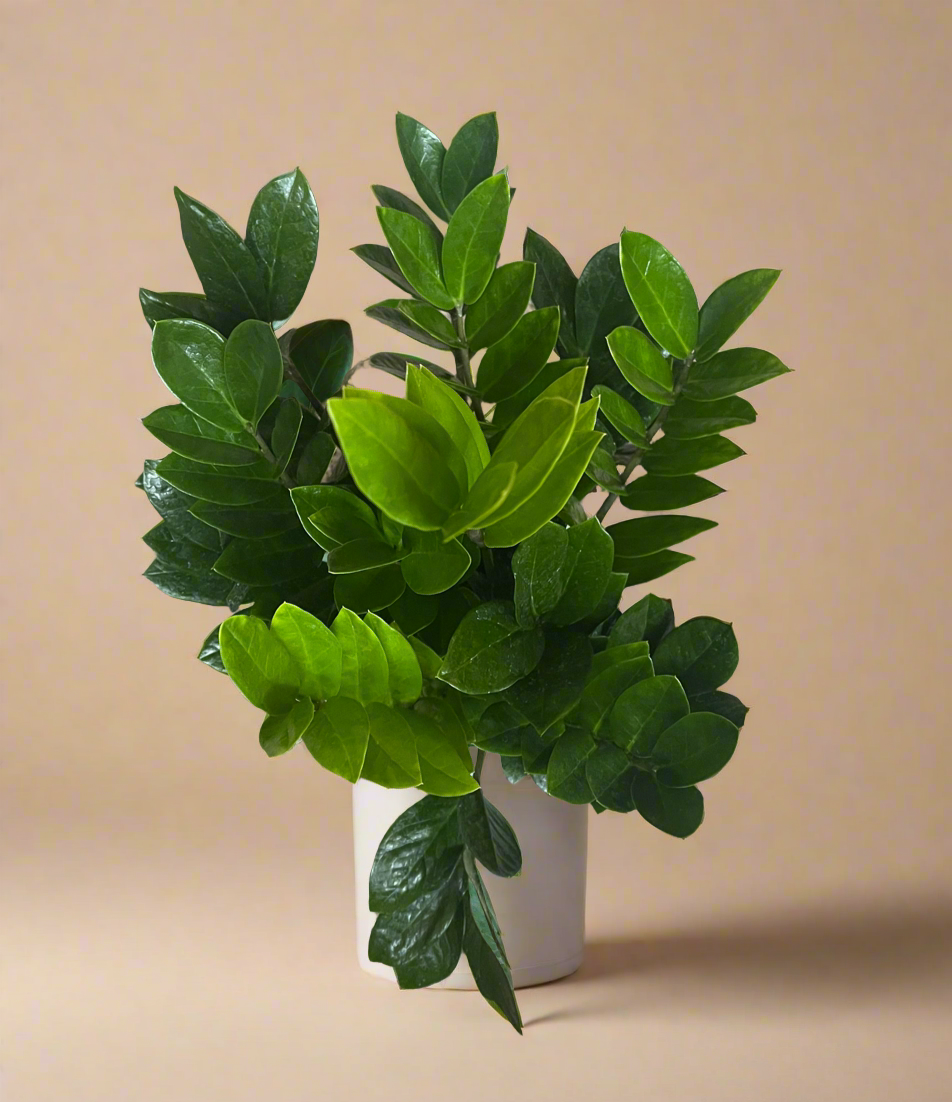
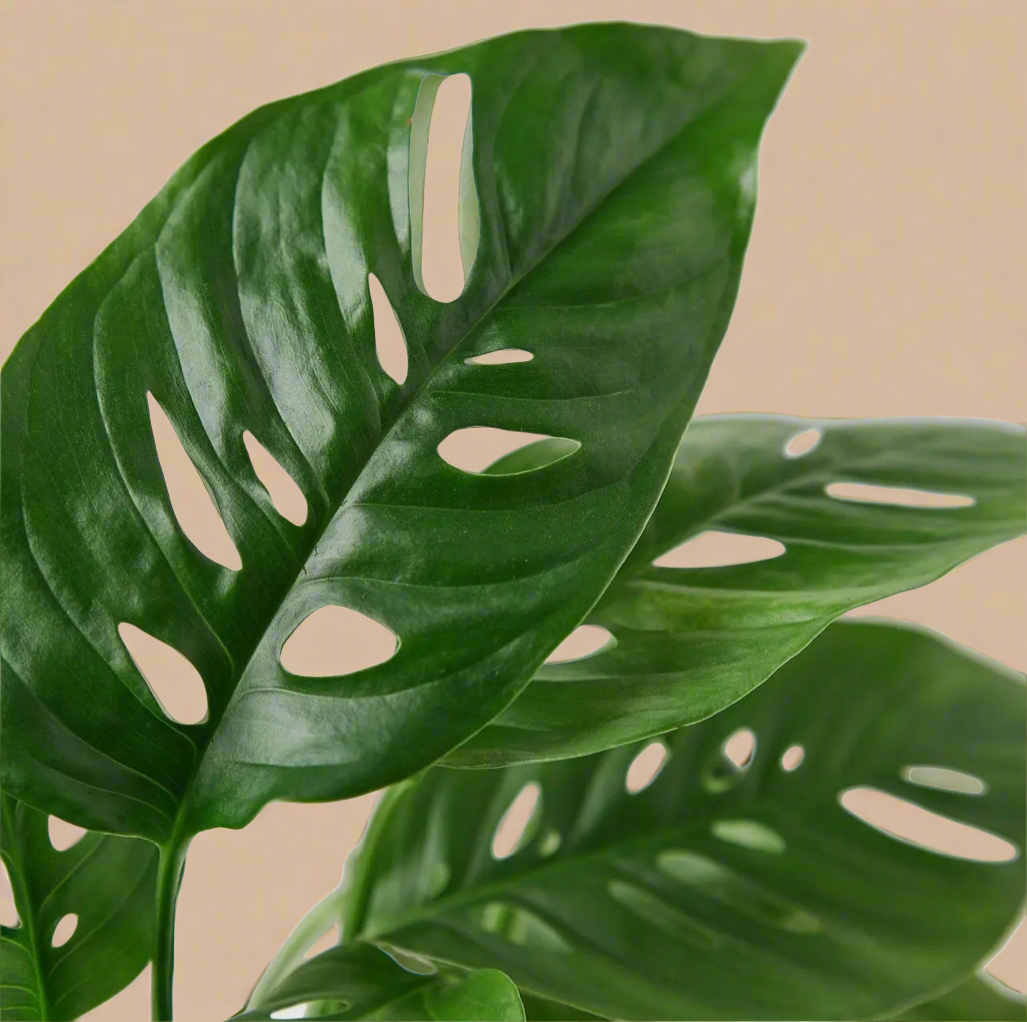
Sedum pachyphyllum f. cristatum is a rare crested mutation of the classic Blue Jelly Bean succulent. Instead of growing in individual plump cylindrical leaves, this plant forms sculptural, fan-shaped, coral-like growth. Its powdery blue-green foliage may develop soft pink to red tones when exposed to bright light and mild stress, making it highly collectible and visually striking.
Light Requirements
Thrives in bright light to full sun.
Indoors: Place near a south or west facing window with several hours of direct sunlight.
Outdoors: Prefers morning sun with some afternoon protection in extremely hot climates.
Insufficient light can cause stretched or misshapen crested growth.
Watering
Follow a soak-and-dry watering method.
Water thoroughly only when soil is completely dry.
Reduce watering during winter dormancy.
Crested forms are especially sensitive to overwatering and rot, so well-draining soil is critical.
Soil
Requires fast-draining cactus or succulent soil.
Adding pumice, perlite, or coarse sand helps improve drainage and prevents moisture retention around roots and stems.
Temperature and Humidity
Prefers temperatures between 60–80°F.
Protect from frost and prolonged temperatures below 40°F.
Performs best in dry environments with good airflow.
Fertilizer
Feed lightly during spring and summer using a diluted cactus or succulent fertilizer.
Avoid fertilizing during fall and winter.
Growth and Maintenance
This crested succulent grows slowly and forms irregular, sculptural clusters.
Remove dead or dried sections to maintain airflow and prevent pest or fungal issues.
Handle gently, as crested growth is more fragile than standard forms.
Propagation
Usually propagated through stem cuttings.
Allow cuttings to callous several days before planting in dry succulent soil.
Crested propagation can be slower and less predictable than standard Sedum varieties.
Pet Safety
Generally considered non-toxic to pets, but ingestion may still cause mild digestive upset. It is best to keep plants out of reach of curious animals.